Program Notes
A NOTE FROM THE MUSIC DIRECTOR
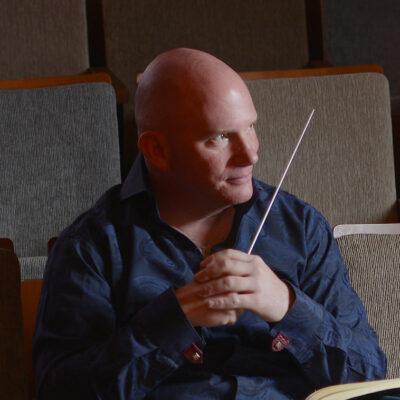 It is my great pleasure to welcome you to the 30th Anniversary Season of The American Prize-winning Waynesboro Symphony Orchestra and our Winter masterworks program, “Romeo and Juliet: A Symphonic Evolution.” This is my 19th season as WSO Music Director, and since stepping on the podium in 2007, I have had the pleasure of witnessing a remarkable evolution in this wonderful organization, artistically, administratively, and in its audience. I am so proud of all we have accomplished together as an ensemble and equally motivated about our future. It is such a privilege to be part of this community of giving musicians and dedicated patrons who are so appreciative of the arts. Since 1996, the WSO has had a rich history of serving the Waynesboro, Staunton, and greater Shenandoah Valley communities, providing opportunities for local musicians to collaborate while adding beautiful artistry to the region. In 2024, I was very proud to accept the Circle of Excellence in the Arts Award on behalf of the WSO. Presented by the Forbes Center, the Arts Council of the Valley, and the College of Visual and Performing Arts at James Madison University, this award honored the Waynesboro Symphony “for outstanding accomplishments and sustained contributions in the arts, improving the cultural vitality of the Shenandoah Valley.” It is because of the dedicated musicians, Staff, Board of Directors, and patrons like you that the WSO has been able to make such a lasting impact on the region and beyond.
We are very pleased to present this unique program, “Romeo and Juliet: A Symphonic Evolution,” which will explore the music of seven composers who used Shakespeare’s tragedy as source material. We are particularly excited to welcome back opera sensation, Penelope Shumate, who calls Waynesboro home and who will sing a delightful aria from Gounod’s opera Roméo et Juliette. Next month our Chamber Music Series returns, and these semiannual concerts feature WSO members performing intimate, small ensemble works while providing a delightful contrast to the rest of the season. Finally, our season closes in April with our “30th Anniversary Gala Concert: Celebrating America – The New World,” which will also honor our Nation’s 250th Birthday as we feature the music of Aaron Copland, Dvořák’s Ninth Symphony, and Gershwin’s iconic “Rhapsody in Blue” performed by the wonderful, Grammy-nominated pianist, John Novacek.
As always, I would like to extend a hearty thank you to the WSO musicians, Staff, Board of Directors, and all of you for your continued support and the opportunity to join with you in another great season of music making. We wish you all a safe and healthy season!
– Peter
Program :: “Romeo & Juliet—A Symphonic Evolution”
| Roméo et Juliette, Opéra in Five Acts: Ouverture – Prologue (1867) > NOTES |
Charles Gounod (1818-1893) |
Romeo and Juliet, Suite No. 2 for Orchestra, Op. 64ter (1937) > NOTES
|
Sergei Prokofiev (1891-1953) |
| “Love Theme” from the motion picture Romeo & Juliet (1968) > NOTES | Nino Rota (1911-1979) |
| “Balcony Scene” from Baz Luhrmann’s film Romeo + Juliet (1996) > NOTES | Craig Armstrong (b. 1959) |
| Roméo et Juliette: Waltz Song, “Ah! Je veux vivre.” (1867) > NOTES :: Penelope Shumate, soprano > BIO | Charles Gounod |
| Romeo and Juliet, Overture—Fantasy (1880) > NOTES |
Pyotr Ilyich Tchaikovsky (1840-1893) |
Romeo and Juliet, Musical Sketches to the Tragedy by W. Shakespeare, Op. 56 (1956) > NOTES
|
Dmitri Kabalevsky (1904-1987) |
| West Side Story Selections (1957) > NOTES
Introduction • “I Feel Pretty” • “Maria” • “Something’s Coming” • “Tonight” • “One Hand, One Heart” • “Cool” • “America” |
Leonard Bernstein (1918-1990), Arranged by Jack Mason |
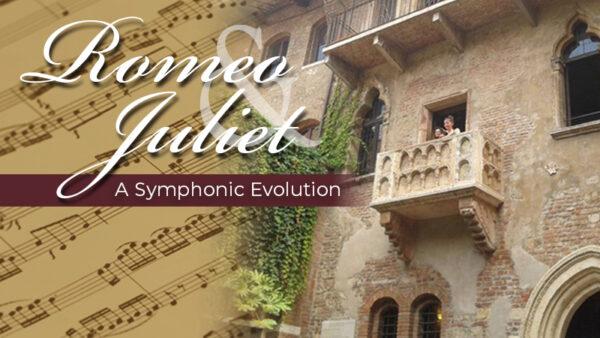
ROMEO AND JULIET – A SYMPHONIC EVOLUTION
The title page of the 1597 first quarto edition of William Shakespeare’s Romeo and Juliet reports that the tragedy had “been often (with great applause) plaid publiquely.” Three further editions appeared before the first folio in 1623, a sign of the play’s continued popularity. Since the end of the puritan revolution, during which London’s theaters were closed, Shakespeare’s tragedy has remained constantly before the public—if often in bowdlerized versions, some of them with happy endings. And in the whole of music history, the Shakespeare play most used as source material by composers was Romeo and Juliet.
The first operatic setting of the story based on Shakespeare’s version was likely that of Georg Benda in 1776. It was produced in Gotha and played successfully on other German and Austrian stages for the decades to follow. Other composers followed suit, such as Nicolas Dalayrac (1792) of France, Daniel Steibelt (1793) of Germany, and Nicola Antonio Zingarelli (1796) of Italy. During much of the 19th century the most celebrated libretto on the subject was by Felice Romani, initially written for Nicola Vaccai’s “Giulietta e Romeo,” which was first performed in Milan in 1825. Five years later in 1830 this text was reworked for the Venice premiere of Vincenzo Bellini’s take on the story, “I Capuleti e i Montecchi.” Based on previous Italian works (including Zingarelli’s), operatic and theatrical, Romani’s version has little in common with Shakespeare. The 19th century brought musical treatments in other genres as well, including Berlioz’ largely choral “Dramatic Symphony” (1839), Gounod’s Five Act Opéra (1867), and Tchaikovsky’s “Overture-Fantasia” (1880), of which the Berlioz and Tchaikovsky have proved the most durable. During the first half of the 20th century, composers who took on Romeo and Juliet included Frederick Delius (1907), Constant Lambert (1926), Prokofiev’s ballet (1935) which produced three suites, and Herbert Stothart (1936), which was the first film adaptation. In the mid-20th century, Kabalevsky composed “musical sketches” of Shakespeare’s tragedy, which was soon followed by Leonard Bernstein’s very popular musical-theater adaptation West Side Story (1957). The dozen or so versions of Romeo and Juliet since 1960 all have been film adaptations.
GOUNOD: Roméo et Juliette, Ouverture – Prologue
Charles Gounod (1818– 1893) was surely familiar with Berlioz’ “Dramatic Symphony” Roméo et Juliette, for after the 1864 premiere of his latest stage work, Mireille, Gounod undertook an operatic setting of Shakespeare’s play for the Théâtre Lyrique in Paris. Gounod’s librettists, the prolific team of Jules Barbier and Michel Carré, who had earlier adapted Goethe’s Faust to produce the composer’s greatest success, probably followed David Garrick’s version of the play’s ending, which had also served Berlioz: Romeo is still alive when Juliet awakens from Friar Laurence’s potion. Another element likely inspired by the precedent of Berlioz is Gounod’s harp-accompanied treatment of Shakespeare’s choral prologue.
Each transformation of Shakespeare’s play works out its own ordering of priorities among the various ingredients of revelry, passion, combat, piety, and sentimentality. And Gounod, surely aware of his own strengths and weaknesses, chose to play down the elements of violence (whereas Prokofiev, among others, emphasized them, for both musical and choreographic reasons). Several of Shakespeare’s characters vanish altogether—even old Montague himself, not to mention the wives of the two feuding noblemen. The story, as Gounod tells it, is so strongly focused on the lovers that even Juliet’s fiancé, Paris, shrinks to little more than a walk-on. Benvolio retains so little identity that the role was usually cut altogether in Paris after 1916 (and occasionally at the Met). His few necessary lines were assigned to the page Stéphano, the only new character introduced by Barbier and Carré.
Gounod first composed Roméo et Juliette, as he had Faust, in the form of an “opéra dialogué”—that is, with spoken dialogue rather than recitative: “the audience’s musical attention should not be tired by the sound of chatter and padding; the audience should be afforded rests and pauses, except where the pathos of the work is at stake.” By the time of the premiere at the Théâtre Lyrique on April 27, 1867, however, he had been persuaded to provide recitatives. Despite the opera’s immediate success (a total of 89 performances in the first season, no doubt due in part to the universal exposition in Paris that year), the process of turning Roméo into a grand opera would continue over some two decades. Georges Bizet had a hand in the modifications for the move to the Opéra Comique in January 1873, as Gounod was in London at the time. When, after 291 performances at the Comique, Roméo was again transferred, this time to the Opéra, Gounod made still further changes, notably the addition of a wedding ballet and a big ensemble. The cast for this gala occasion, on November 28, 1888, included Adelina Patti (Juliette), Jean de Reszke (Roméo), Leon Melchissédec (Mercutio), and Edouard de Reszke (Friar Laurence), with the composer on the podium.
While Gounod avoids anything resembling a motivic scheme, the cello melody at the end of the Ouverture-Prologue functions as a “star-crossed love” theme, repeated after Roméo departs for exile. Fragments and variations of it crop up at crucial points in the score: the choral phrase “Ah! Qu’elle est Belle” on Juliette’s first entrance is echoed by Roméo after his first sight of her, and by a minor-mode version preceding his “Salut, Tombeau” in the final scene. Indeed, much of the tomb scene is devoted to reminiscences of earlier passion and happiness.
Bach is easily recognized as one of the sources of Gounod’s style—not only in the churchly fugue that introduces Friar Laurence, but in the more vigorous one in the Ouverture-Prologue representing the feuding families. The powerful confrontation following Tybalt’s death is one of Gounod’s greatest scenes, with a solemn chorus recalling Mozart’s Idomeneo. The opening of the interlude known as “Juliette’s Slumber” looks very like a conservative gloss on the notorious first phrases of Wagner’s Tristan. But the opera’s central language is Gounod’s own blend of lyricism and passion. In the solos and duets of the two principals, and in the elegantly fanciful setting of Mercutio’s “Queen Mab” speech, it has served to keep the opera fresh for 140 years.
The aria-waltz, “Ah! Je veux vivre dans ce rêve” (“Ah! Let me live in this dream”), Juliet’s waltz-song, is a famous, lighthearted coloratura aria from Act I that expresses Juliet’s desire to remain in the “dream” of youth while refusing to a quick marriage. She almost desperately tries to fight off the “gloomy winter” of adult responsibilities.
PROKOFIEV: Romeo et Juliet, Suite No. 2, Op. 64ter – 1. The Montagues and Capulets
Sergei Prokofiev (1891-1953) was a Russian composer, pianist, and conductor who later worked in the Soviet Union. As the creator of acknowledged masterpieces across numerous music genres, he is regarded as one of the major composers of the 20th century. His works include such widely heard pieces as the March from The Love for Three Oranges, the suite Lieutenant Kijé, the ballet Romeo and Juliet, and Peter and the Wolf. Of the established forms and genres in which he worked, he created (excluding juvenilia) seven completed operas, seven symphonies, nine ballets, five piano concertos, two violin concertos, a cello concerto, a symphony-concerto for cello and orchestra, and nine completed piano sonatas.
The seventh of Prokofiev’s nine ballets is his setting of Romeo and Juliet, Op. 64, which has become a treasured classic. It was first composed in 1935 and was substantially revised for its Soviet premiere in early 1940. The composer would later create three popular orchestral suites (Op. 64bis, Op. 64ter, Op. 101) and a suite of ten pieces for solo piano, Op. 75 from his ballet. The history of the creation of the ballet was recited by the composer himself:
“At the end of December (1934) I returned to Leningrad specifically for the negotiations with the Kirov Theatre. I expressed my wish to find a lyrical scenario for a ballet… We started recalling the scenarios: Piotrovsky named Pelléas and Méllisande, Tristan and Isolde, Romeo and Juliet. I immediately ‘clung’ onto the latter – it would be impossible to find a better one! It was arranged that Piotrovsky, Radlov and I (S.P.) would be making a libretto. It was decided to engage as a producer Rostislav Zakharov – a former student of Radlov… However, we didn’t conclude a contract with the Kirov Theatre… I arrived in Moscow, and Golovanov, the then chief conductor of the Bolshoi Theatre said that if this was about ‘Romeo’ the Bolshoi theatre would immediately conclude a contract with me. The contract was signed in the summer of 1935. The theatre gave me the opportunity to work on the ballet in ‘Polenovo’ – the holiday home of the Bolshoi theatre, where I managed to almost finish the ballet using themes composed in the spring. An audition of the ballet took place in the theatre. It had no success. The ballet was not put on the stage at that time… Yet it was staged in the Kirov Theatre in 1939 (1940). R. Zakharov dropped out after the ballet had been rejected by the Bolshoi theatre. Lavrovsky, on the other hand, during the staging of the ballet in Leningrad, added quite a lot to what had been composed before him. Later I decided to include him in the co-authors of the libretto.”
Each of the two orchestral suites Prokofiev arranged in 1936 from the music for Romeo and Juliet has seven titled sections. Suite No. 1 (Opus 64-bis) focuses on rearranged genre episodes from Acts I and II and does not attempt to follow the dramatic action. Four of its sections are dance intermezzi and only two (“Madrigal” and “Romeo and Juliet”) make use of the major dramatic leitmotifs. Suite No. 2 (Opus 64-ter), on the other hand, possesses a more logical narrative structure that follows the play’s plot. The third suite (Opus 101), made in 1946, is a series of tableaux with no narrative goal.
Prokofiev scholar Harlow Robinson stated: “Romeo and Juliet represents a giant step forward in Prokofiev’s evolution as a ballet composer. It is a remarkable synthesis of the five ‘lines’ of his musical personality, as he once described them: classical, modern, toccata (or motor), lyrical, and grotesque. His aggressive ‘Scythianism’ found brilliant expression in the violent hostility between the Montagues and Capulets, and in the brutal darkness of the unenlightened medieval setting. His ‘classicism’ found an outlet in the courtly dances required of an aristocratic setting, such as gavottes and minuets. Entirely appropriate for some of the character roles, such as the Nurse, was Prokofiev’s famous satirical style, while his scherzo style suited volatile characters like Mercutio. And finally, Prokofiev’s lyricism, an increasingly important part of his artistic personality since the late 1920s and now reinforced by the Soviet musical environment (which prized melody and accessibility above all else), was both necessary and particularly successful in conveying the innocent passion between the lovers that lies at the center of the drama. Romeo is Prokofiev’s first completely successful lyrical stage work, and his first convincing portrayal of non-ironic romantic love.”
ROTA: Romeo & Juliet – “Love Theme”
Nino Rota (1911-1979) was born into a musical family in Milan. He began studying piano with his mother as a child, was composing by age eight, and had completed an oratorio and an opera by age thirteen. He was admitted to the Milan Conservatory in 1923 and studied privately for two years with the school’s director, Ildebrando Pizzetti, before entering the Accademia di Santa Cecilia in Rome in 1926 as a student of Alfredo Casella. Rota received his diploma in composition from the Accademia the following year. From 1930 to 1931, Rota lived in Philadelphia and attended the Curtis Institute of Music, where his principal teachers were Rosario Scalero in composition and Fritz Reiner in conducting. Rota ended his formal education by earning a degree in literature from the University of Milan in 1937. After a brief period teaching at a music school in Taranto, he joined the faculty of the Bari Conservatory in 1939, was named director in 1950, and remained at the school until his death in 1979.
Although Rota wrote prolifically for the stage and concert hall — ten operas, five ballets, oratorios, cantatas, orchestral works, chamber and piano pieces — he is best remembered as the composer of more than 150 film scores. He began composing for the Italian cinema in the early 1940s and had scored some 30 films before he first collaborated with Federico Fellini in 1952 on Lo Sciecco Bianco (“The White Sheik”). Rota composed the music for all of Fellini’s films for the next thirty years, including La Strada, La Dolce Vita, Boccaccio, Eight and a Half, Juliet of the Spirits, Satyricon and The Orchestra Rehearsal. He also worked with such other leading directors as Renato Castellani, Luchino Visconti, Franco Zeffirelli, Mario Monicelli, King Vidor and René Clément but found his greatest success with Francis Ford Coppola in the Godfather series. Rota won an Academy Award for his original score to The Godfather, Part II (1974). Among Rota’s most unabashedly romantic contributions to the cinema is his music for Paramount Pictures’ 1968 Romeo & Juliet, starring Leonard Whiting and Olivia Hussey and directed by Franco Zeffirelli after Shakespeare’s timeless tragedy of fated young love. The film was nominated for Academy Awards for Best Director and Best Picture, and Rota won the Italian National Syndicate of Film Journalists Award for his score.
ARMSTRONG: Romeo + Juliet, “Balcony Scene”
Craig Armstrong (b. 1959) is a Scottish born composer whose orchestral writing, electronic music, and wide ranging artistic collaborations in classical and film music have garnered him worldwide acclaim. He studied at the Royal Academy Of Music under Corenlius Cardew, Paul Patterson, and Malcolm MacDonald, developing an approach that evokes delicate shifts in atmosphere and emotion. Armstrong has composed scores for both Hollywood and independent films, from Peter Mullan’s directorial debut The Close Trilogy to the BAFTA, Ivor Novello, and Golden Globe award winning scores for Baz Luhrmann’s Romeo + Juliet and Moulin Rouge! Armstrong also scored such films as Love Actually, World Trade Center, Far From The Madding Crowd, The Great Gatsby, Snowden, and the Grammy award winning score for Ray. Most recently, he composed scores for Norman Stone’s drama about C.S. Lewis, The Most Reluctant Convert, as well as scores for Dirt Music, The Burnt Orange Heresy, The Critic, and The Great Escaper.
Armstrong has built an impressive repertoire of both classical and popular music as well. Citing influences from Classical, Jazz, Pop, and experimental music, his latest signing to the newly formed imprint Modern Recordings (BMG Germany) began with The Edge Of The Sea, an album that is a culmination of his interests in Gaelic psalm singing from the west coast of Scotland. Developed over several years and in close collaboration with the Hebridean composer Calum Martin, the album is a unique recording of this traditionally acapella Gaelic psalm singing featuring the innovative Scottish Ensemble.
TCHAIKOVSKY: Romeo and Juliet, Overture–Fantasy
Pyotr Ilyich Tchaikovsky (1840-1893) was a great composer of the Romantic period and the first Russian whose music would make a lasting international impact. He wrote some of the most popular concert and theatrical music that is still prominent in the repertoire, including the ballets Swan Lake and The Nutcracker, the 1812 Overture, his First Piano Concerto, his Violin Concerto, the opera Eugene Onegin, six symphonies, the String Serenade, and his Romeo and Juliet, Overture-Fantasy, which he composed in 1869, the premiere of which took place in Moscow in 1870 with Nikolai Rubinstein conducting the Russian Musical Society.
Tchaikovsky was 29 when he composed his Romeo and Juliet. Arguably the most famous orchestral work using the Shakespeare tragedy as source material, it was Tchaikovsky’s first masterpiece, and he was emotionally primed for his musical portrayal of the star-crossed lovers by his own romantic misadventure of the preceding year. He had been infatuated with the French opera singer Désirée Artôt, who was enjoying a considerable vogue in St. Petersburg in 1868. The composer felt strongly enough to consider marrying her, and he carried his suit to the singer, whom he described to his brother Modeste as possessing “exquisite gesture, grace of movement, and artistic poise.” However, she apparently regarded his proposal of marriage less seriously than he did because within a month she was married to another opera singer, Padilla y Ramos, in Warsaw. Tchaikovsky never revealed exactly how deep a wound this affair inflicted, but he did make a point of recounting their later meetings in his personal letters, always praising her beauty and artistry. His torch for Artôt may never have been fully extinguished. At any rate, while the Artôt episode was probably not directly responsible for the creation of his Romeo and Juliet, it was an important emotional component of Tchaikovsky’s personality at the time. The composer, a firm believer that Fate seeks to dampen man’s every happiness, could easily have drawn a parallel between his personal loss and the tragedy of Shakespeare’s drama.
Former New York Philharmonic program annotator Edward Downes summarized the drama and power of Tchaikovsky’s Romeo and Juliet: “The composers who have been inspired, or who thought they were inspired by Shakespeare, make an endless list,” Downes wrote. “And in that history, Tchaikovsky is one of the very few who speaks with the elemental passion and strife that grip us as do the words of Shakespeare.”
KABALEVSKY: Romeo and Juliet, Musical Sketches
Dmitri Kabalevsky (1904-1987) was a renowned Soviet composer born into the family of a public servant. He received a music education at the Moscow State Conservatory (1925-30), where he studied composition under Professors Katuar and Myaskovsky (completed in 1929), and piano under Professor Goldenvisor (completed in 1930).
Kabalevsky’s wide range of creative interests and his striving toward different areas of musical and public life during his years at the Conservatory developed into the key traits of his subsequent activities. Composer, Professor at the Moscow Conservatory, critic and writer for different publications, performer of his own compositions (as pianist and as conductor), and public advocate were the various forms of his active life. Kabalevsky presented Soviet culture abroad on multiple occasions, namely in Finland, Hungary, Austria, England, Czechoslovakia, Poland, China, and France. His creativity was highly refined by the demonstration of deep commitment to Russian classics, and he was distinguished by the highest professionalism, working in multiple genres. In particular, he wrote four operas, an operetta, a ballet (not completed), symphonic, choral, chamber, and vocal compositions, as well as concertos for various instruments. Kabalevsky also wrote music for theatrical performances, movies, and radio theater. One of his final works was his Romeo and Juliet, Musical Sketches to the Tragedy by W. Shakespeare, Op. 56, composed in 1956. It wasn’t by chance that Kabalevsky turned to the works of Shakespeare, for he had already composed ten pieces set to Shakespeare’s sonnets, which demonstrated his interest in the works of the great English writer.
Kabalevsky’s Romeo and Juliet was premiered in Moscow in 1957 under the direction of the composer himself. The “musical sketches” were based on music he had composed for a theatrical production of Romeo and Juliet at the Vakhtangov Theater in Moscow. This work for large orchestra exists as a free-standing composition consisting of ten parts that are connected by the clear line of dramatic development. Beginning with the exposition of main characters – the dark and evil wrath between the families of the Montagues and Capulets and the light of true love between Romeo and Juliet (Introduction) – through numerous scenes, the composer approaches one of the important dramatic moments, the inception of the drama, which is the meeting between Romeo and Juliet (Lyrical Dance). The special place in the cycle is taken by the scene “In Friar Laurence’s Cell,” for in this scene the listener is shown the passage of events: the ascetic character of Laurence interchanging with the passionate theme of love, and the threatening, intimidating warnings of impending wrath. The finale of the “musical sketches” constitutes a thematic reprise of the whole cycle (Death and Atonement). The main leitmotif of the symphonic cycle is the theme of love between Romeo and Juliet piercing through all the music and touching the listener with its deep and sincere feeling, despite the tragic finale, and establishes the victory of the lighter side of human existence.
BERNSTEIN: West Side Story Selections
Leonard Bernstein (1918-1990) was an American conductor, composer, pianist, music educator, author, and humanitarian. Considered to be one of the most important conductors of his time, he was the first American-born conductor to receive international acclaim. Bernstein was “one of the most prodigiously talented and successful musicians in American history” according to music critic Donal Henahan. Bernstein’s honors and accolades include seven Emmy Awards, two Tony Awards, and 16 Grammy Awards (including the Lifetime Achievement Award) as well as an Academy Award nomination. He received the Kennedy Center Honor in 1981. As a composer, Bernstein wrote in many genres, including orchestral music, ballet, film and theatre music, choral works, opera, chamber music, and pieces for the piano. His works include three symphonies (No. 1 “Jeremiah” (1942), No. 2 “The Age of Anxiety” (1949/1965), and No. 3 “Kaddish” (1963/1977), Serenade after Plato’s “Symposium” (1954), Chichester Psalms (1965), the original score for the Elia Kazan drama film On the Waterfront (1954), theater works including On the Town (1944), Wonderful Town (1953), and Candide (1956), the Broadway musical West Side Story (1956), which continues to be regularly performed worldwide and has been adapted into two feature films (1961 and 2021), and his Mass (1971).
A native of Boston, Bernstein had a life-long fascination with New York City. He served as music director and conductor of the New York Philharmonic for many years and used the city as the setting for several of his own original works. He was introduced to the idea of an adaptation of Romeo and Juliet set in New York by choreographer Jerome Robbins as early as 1949. His idea was to turn the story of the warring Capulets and Montagues into one about New York Jews and Catholics, set on the east side of New York. Bernstein liked the idea but could not make time in his busy schedule to really think about it until about six years later. By then the idea had evolved (based partly on national news reports) into a gang feud between white New Yorkers and Puerto Ricans on New York’s west side. He enlisted the aid of a very new Stephen Sondheim to supply the lyrics. Arthur Laurents put the story together, and Robbins did the staging, finally completing the show in 1957. West Side Story came to the stage on Broadway in September of that year and ran for almost 2 years. Its New York run ended in 1960 after 732 performances and six Tony awards. In 1961 it was made into a movie and took 10 Oscars, including Best Picture.
When West Side Story was adapted for the big screen, the cast included an unknown Richard Breymer as Tony (after Elvis Presley reportedly turned down the role) and Natalie Wood as Maria. Bernstein’s music was so difficult that, although Breymer and Wood could both sing, more adept vocalists were used and their voices dubbed. Songs like “Maria” and “Cool” are filled with tense, angular meter. “America” has a series of lightning quick syncopations and acrobatic Latin-inspired patterns. There are also romantic and achingly lovely melodies like “Tonight,” “Somewhere,” and the wedding hymn “One Hand, One Heart.” “Something’s Coming” introduces us to Tony, who would rather avoid fighting and simply be with the naively sweet Maria, as she sings “I Feel Pretty.” The score was orchestrated by Sid Ramin and Irwin Kostal, who said of Bernstein, “If he’d had the time, he wouldn’t even need us. When it came to West Side Story, every note was his.”
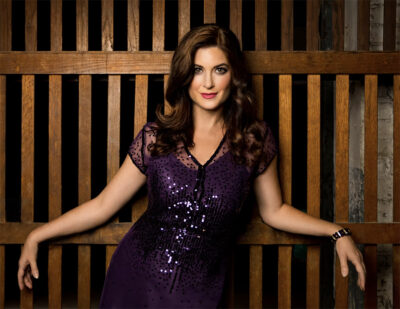 Praised by The New York Times for “bell-like clarity and surpassing sweetness,” The New York Concert Review for “sparkling coloratura perfection,” and in Opera News magazine for “sincerity and attractive lucidity,” Penelope Shumate enjoyed her 20th soloist appearance at Carnegie Hall in New York City this past season performing the North American premiere of One World by Sir Karl Jenkins. She has also appeared as a soloist at David Geffen Hall and Alice Tully Hall at Lincoln Center in New York. Her recordings include “Messiah Refreshed” (Signum Records) recorded at Abbey Road Studios with the Royal Philharmonic Orchestra, “Kassandra” (Navona Records), “La pasión según San Marcos” (Summit Records), and “As the fireflies watched… chamber music of James M. Stephenson” (Klavier Records). She is featured in the May 2025 issue of Classical Singer Magazine detailing her versatility as a performer and teacher of classical as well as contemporary commercial music vocal genres such as musical theatre and jazz. At the Classical Singer national convention in Chicago, she served as a presenter, Masterclass clinician and judge. She has performed internationally and throughout the US including appearances with Opera Company of Philadelphia, Opera Roanoke, Des Moines Metro Opera, Utah Festival Opera, Annapolis Opera, Opéra Louisiane, Opera on the James, Muddy River Opera Company, Waynesboro Symphony Orchestra, Santa Fe Symphony Orchestra, Alabama Symphony Orchestra, Oklahoma Philharmonic, Lansing Symphony Orchestra, Gulf Coast Symphony Orchestra, Hilton Head Symphony Orchestra, Heartland Festival Orchestra, Paducah Symphony Orchestra, Gateway Chamber Orchestra, Rapides Symphony Orchestra, Shenandoah Valley Bach Festival, Distinguished Concerts International New York, Berkshire Choral Festival, Chamber Orchestra of Philadelphia, and the Kennett Symphony Orchestra, among many others. Her professional opera role performances include Adina in L’Elisir d’Amore, Pamina and Papagena in The Magic Flute, Micaëla in Carmen, Laurie in The Tender Land, Violetta in La Traviata, Galatea in Acis and Galatea, Adele in Die Fledermaus, Musetta in La Bohème, Konstanze in Die Entführung aus dem Serail, Hanna in The Merry Widow, Fiordiligi in Così fan tutte, among many others. Her professional concert soloist appearances include performing Messiah, The Creation, Symphony No. 9 (Beethoven), Carmina Burana, Magnificat (Bach and Vivaldi), Te Deum (Dvořák), Symphony No. 2 and No. 4 (Mahler), Requiem (Mozart, Verdi, Fauré, Rutter), Dona Nobis Pacem, Stabat Mater (Mealor), Ein Deutsches Requiem, Elijah, Coronation Mass, and Dixit Dominus (Vivaldi), among others. She is an award winner with the Gerda Lissner Foundation, The American Prize, the MacAllister Awards, and the Annapolis Opera Vocal Competition, among others. As a presenter she has been engaged by the National Opera Association, the National Association of the Teachers of Singing, the College Music Society as well as numerous Universities across America. Her academic service at the University level includes many years of experience teaching voice, lyric diction, voice class, vocal pedagogy and literature as well as opera theatre. She holds a Doctor of Musical Arts (DMA) in Vocal Performance and Vocal Pedagogy from Louisiana State University. She recently moved back home to Shenandoah Valley where she teaches voice and piano lessons. Visit www.penelopeshumate.com.
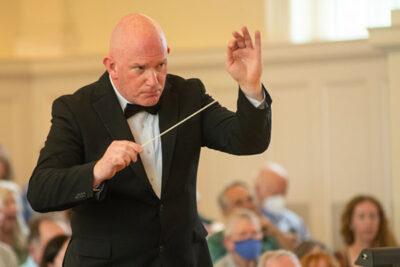 Peter Wilson is an engaging and multifaceted violinist, conductor, arranger, and composer whose artistry has been noted as “first-class” by The Washington Post. He is the former senior enlisted music advisor to The White House, where he led countless ensembles and performed for 30 years as a Marine violinist in direct support of five Presidents. He served as String Section Commander for the Marine Band and upon retiring was awarded the Legion of Merit. Peter serves as Music Director of the Richmond Philharmonic and The American Prize-winning Waynesboro Symphony Orchestras in Virginia as well as Artistic Director and Conductor of the American Festival Pops Orchestra in the National Capital Region. Peter began his career as Concertmaster of the Walt Disney World Orchestra, has conducted the National Symphony and National Gallery of Art Orchestras, and holds degrees from Northwestern and Catholic University, where he earned a Doctor of Musical Arts. He has appeared as violin soloist with such legends as Rosemary Clooney, Renée Fleming, Bernadette Peters, and Randy Travis, and performed the “Theme” from Schindler’s List at The Kennedy Center under the baton of Academy Award-winning film composer John Williams, who hailed Peter as a “brilliant musical artist.” A true music ambassador, Peter has soloed in unique venues around the globe including the American Embassy in Paris, the Presidential Retreat at Camp David, the private chambers of the Vatican before The Pope, and Carnegie Hall. He also performed with Gershwin Prize recipient Stevie Wonder at the Library of Congress in the world premiere of Wonder’s “Sketches of a Life.” He is regularly invited to perform his moving solo violin arrangement of The Star-Spangled Banner for high-profile events including Major League Baseball games. A Cleveland native, Peter began violin at age two and piano at age five, later moving to Morgantown, West Virginia, where he became the first musician ever to receive the Governor’s Award for Exceptional Achievement in the Arts. ClevelandClassical.com reviewed a live concert recording at the National Gallery of Art, stating it was “beautifully performed by the National Gallery Chamber Players under the direction of conductor Peter Wilson.” For twelve years Peter served as Lecturer at the Benjamin T. Rome School of Music, Drama, and Art at Catholic University, teaching conducting and strings while serving as Resident Conductor of the University Symphony. He was Music Director of The Youth Orchestras of Fairfax in Virginia (2010-2013) and Violin Instructor at George Mason University (2017-2021) and James Madison University (2014-2017). Peter maintains his commitment to working with young musicians as a guest conductor and adjudicator for district and regional middle and high school honors orchestras nationwide. Phi Mu Alpha Sinfonia national music fraternity honored Peter with its prestigious “Signature Sinfonian” award for his “outstanding commitment and dedication to the performing arts while serving as a successful role model, helping others realize their potential and exhibiting high standards of excellence.” The Strad magazine encapsulated his performances best, stating “[Wilson] made music that had the stamp of quality.” For further information, visit